Do People Get in Trouble for Downloading or Uploading
We are reader supported and may receive a committee when you make purchases using the links on our site.
What is Torrenting? Is information technology Safe? Is it illegal? Are you likely to exist caught?
Looking to find out more about torrenting? We explain exactly what torrenting is, how to torrent safely, and what to do if you get caught.
@pabischoff UPDATED: January eighteen, 2022
Three questions I'one thousand ofttimes asked are: Is torrenting safe, is torrenting legal, and what happens if I go caught? This mail service answers those questions and looks at the methods torrenters utilise to stay safety and anonymous.
What is Torrenting?
Torrenting is the act of downloading and uploading files through the BitTorrent network. Instead of downloading files to a central server, torrenting involves downloading files from other users' devices on the network. Conversely, users upload files from their own devices for other users to download.
Torrenting is the most popular form of peer-to-peer (P2P) file-sharing, and it requires torrent management software to connect to the BitTorrent network. Such software tin can be downloaded for free for a number of different devices.
Everyone downloading or uploading the same file is called a peer, and collectively they are known as a swarm. Because of how BitTorrent works, a peer can download a file from several other users at once, or upload a file to multiple other users simultaneously.
Torrenting is often associated with piracy because it'south frequently used to share files that are protected by copyright, including movies, games, music, and software. However, torrenting has many legitimate uses likewise, such as lessening the load on centralized servers by distributing the hosting burden amid users.
Torrenting safety and legality: In short
Is torrenting legal or illegal? Torrenting itself isn't illegal, but downloading unsanctioned copyrighted fabric is. It's non always immediately apparent which content is legal to torrent and which isn't. Some autumn in a gray area, and so you may discover yourself unwittingly on the wrong side of the police.
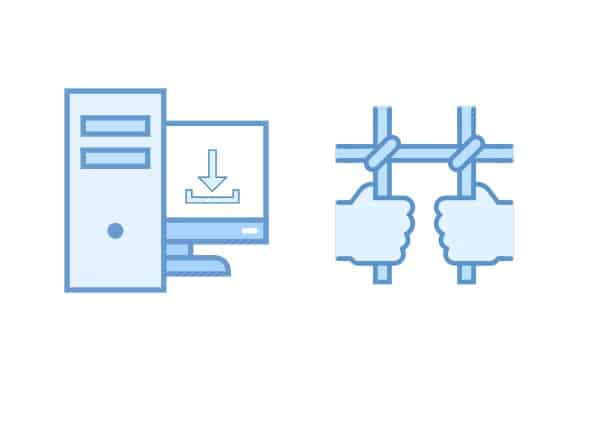 Your internet service provider (Internet service provider) and copyright trolls monitoring the BitTorrent network tin can accept activity if they catch you lot illegally torrenting. This tin can range from a warning letter and throttling (slowing down) of your internet connexion speeds to legal action – although the latter is increasingly rare.
Digital privacy-conscious torrenters will use VPN services, or virtual private networks, to keep their internet activity hidden from their Internet service provider. With a wide range of applications, some VPNs are better suited for torrenting than others. If you want to keep your ISP from snooping on your activity, choose a VPN connection that: a) doesn't keep a log of your activity, b) isn't based in a country where the legal system can exist used to need customer records, and c) is fast plenty that it won't slow entire downloads. We've rounded up the providers that fit these criteria and others in our list of the best torrenting VPN services.
How to torrent safely
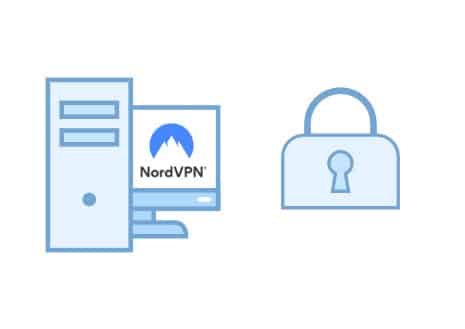
It is relatively elementary to torrent safely and keep your online activity private. Note that while a VPN for torrenting volition continue your action private and condom from prying optics you may still be susceptible to malware from some public torrent sites. Follow these 5 steps to torrent privately with a VPN.
Here's how to torrent safely:
- Download and install a VPN matching the criteria mentioned above. We recommend NordVPN.
- Enable your VPN'southward impale switch, if it has i.
- Connect to a VPN server, preferably in a P2P-friendly land
- One time the connectedness is established, open your torrent customer and start downloading as usual
- Your online activeness is now encrypted past your VPN
WANT TO Attempt THE TOP VPN RISK FREE?
NordVPN is offering a fully-featured take chances-free 30-day trial if you sign upwards at this folio . You can apply our #i VPN for torrenting with no restrictions for a full month — keen if you desire to effort its P2P-optimized servers outset-hand.
There are no hidden terms — just contact support within thirty days if you lot decide NordVPN isn't right for you and you'll receive a full refund. Showtime your NordVPN trial here .
Torrenting without a VPN
Torrenting without a VPN means your isp (ISP) can see your online activity including the sites you visit and the content you view. In certain countries, including the U.s.a., ISPs are allowed to share this information with tertiary parties including intellectual property owners. A VPN will go along your online activity private from your Internet access provider.
Is uTorrent safety?
uTorrent is the official torrent customer from the creators of the BitTorrent protocol. It is proprietary—non open source—software maintained by a legal US visitor. Like BitTorrent, the uTorrent software itself is legal, although information technology can exist used for digital piracy. The official uTorrent is free of malware and can be used safely and privately in combination with a VPN. It does not, however, forestall users from downloading malicious files that tin can infect their device.

In detail
The BitTorrent protocol rose to get the most popular medium for peer-to-peer file sharing in the world after the demise of centralized services similar Napster and Limewire. Unlike those services, torrenting is almost completely decentralized save for the trackers that allow users to search and download torrent files and magnet links. Torrent files and magnet links are used to detect other users on the network who host the desired file or files but do not actually host those files for downloading.
Is BitTorrent safe and legal?
The BitTorrent protocol is non in itself illegal or unsafe. It is merely the means to share any type of file, and plenty of legal torrenting services do exist. The most popular torrent trackers, such equally ThePirateBay and KickassTorrents, notwithstanding, operate in a legal greyness area, offering users gratuitous admission to copyrighted content. Sharing and downloading copyrighted content by BitTorrent, or other means, is illegal in many countries and can be unsafe since sites including KickassTorrents have been shown to host malware.
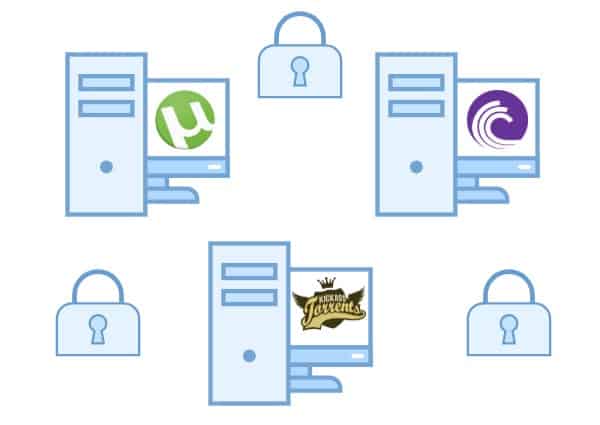
These trackers would argue that they just find and organize information that is already out at that place, and they do not illegally host any copyrighted content on their own servers. Just similar the BitTorrent protocol itself, they are the ways to an end. Not everyone is convinced. Major trackers take come up nether heavy legal scrutiny from content creators and distributors who contend the trackers enable and encourage theft.
The blame ultimately shifts to the users, the millions of individuals who host files on their personal computers, downloading and uploading movies, games, software, music, ebooks, and more. Users connected to the aforementioned tracker are called peers, and they fall into 2 categories. A leech uses a torrent file or magnet link to download the file from other users on the network who already have the file. These users who already have the file are called seeds. When a leech is finished downloading a file (or fifty-fifty just office of a file), he or she becomes a seed, allowing other leeches to download the file from his or her computer. As a general rule, it's considered proper pirate etiquette to seed as much every bit you leech.
Comparitech does not condone or encourage any violation of copyright police or restrictions. Please consider the law, victims, and risks of copyright piracy before downloading copyrighted cloth without permission.
Legally speaking, seeding and leeching copyrighted textile autumn into different criminal categories. Think of it like ownership illegal drugs: purchasing the drugs for personal use is definitely a offense, but a relatively small i. Turning effectually and selling those drugs to others is a much more serious offense. Finding the original source of the drugs, or in this case the HD rip of the new Avengers motion picture, would exist the all-time case scenario for police force enforcement, merely that isn't always possible. The trackers human activity every bit the shady back aisle marketplaces where all of these transactions go down, but they don't personally handle whatsoever of the drugs.
What happens if you are caught torrenting?
The prosecution of torrent users has been sporadic. The chances of actually going to court or having to pay a settlement are pretty slim, but the penalties can be extremely high. The frequency of copyright holders suing torrenters for copyright infringement peaked in the tardily 2000s. Copyright pirates were sued for wildly disproportionate amounts of money, and most settled out of court.
These public scare tactics shone poorly on the recording and movie industries because they were portrayed as footling millionaires bullying poor college students. Direct lawsuits are much less mutual these days, only the campaign confronting torrenters is far from over.
Copyright trolls
At present the chore of going after private copyright pirates has been outsourced to a growing number of small businesses known equally copyright trolls. These companies locate torrenters who illegally download copyrighted content through their existent IP addresses. They so approach the copyright owners and sign a deal that lets them take legal action on their behalf. Others are hired directly by Hollywood product companies to sniff out pirates.
With legal leverage and a list of names, the copyright trolls and then become subsequently torrenters via post, email, or fifty-fifty past going door to door and handing out settlement letters. These letters are non legally bounden documents or injunctions. Copyright trolls utilize intimidation, fear, and shame to make torrenters pay without ever going to court. A mutual tactic is to threaten to sue for over $100,000 only simply ask for $3,000 or and so in the settlement. That makes the $3,000 look similar a good deal, but going to court is plush and risky for them, so don't requite in if you receive such a letter.
What to practice if you receive a settlement letter
The nearly common fashion to receive a settlement letter is through your net provider. A copyright troll will get through the courtroom system to subpoena your ISP and force it to email customers with a legal threat and hand over personal details.
Co-ordinate to US police, an IP address is not a person. If you were contacted through your Internet access provider, chances are that'southward because the copyright troll doesn't know your bodily identity yet. If the letter doesn't contain any identifying data on y'all, continue it that fashion and do nothing. Your example could be dismissed before the engagement that your Internet access provider is fix to reveal your personal details to the troll. If yous respond and identify yourself, that gives the troll a more direct means of targeting you lot.
This is a game of probability for copyright trolls. If they transport out 1,000 threatening emails and 50 people reply, they only demand a handful to actually coughing upwards coin to make it worth their time. Chances are it's more cost effective for them to move on to the next swarm of torrenters than pursue the remaining 950 people.
If things escalate and you decide to take activity, lawyer upward. Here's a list of attorneys compiled by the Electronic Frontier Foundation that specialize in these sorts of cases.
Internet access provider penalties
Depending on your Internet service provider, it may take actions against y'all on its own behalf. That could mean throttling your internet connection or threatening to hand over personal details to a copyright troll. Why does your Internet service provider even intendance? Because torrenting takes upwardly a lot of bandwidth, and that bandwidth costs ISPs money. On elevation of that, an ISP could exist receiving kickbacks from content owners and their associates.
How to protect yourself
To avert whatsoever legal ramifications, it'southward best to simply not torrent. Nevertheless, if you insist on torrenting, accept the time to protect your online privacy and keep copyright trolls at bay.
Use a VPN when torrenting
The best way to torrent safely is by using a VPN. A VPN accomplishes two things: kickoff, it re-routes all your internet traffic through a server in a location of your choosing, which changes your real IP address to one used past hundreds or thousands of other people (assuming your VPN uses shared IP addresses, which most do). This adds a pregnant layer of anonymity and makes it much more difficult for anyone to track you. 2d, a VPN encrypts all your torrent traffic earlier it leaves your computer. That means your Internet access provider cannot monitor your internet activity, nor can anyone else. And because all your traffic heads to the VPN server commencement, ISPs tin't fifty-fifty tell where it's going.
Using a quality VPN is central; don't settle for a "free" service or VPNs that log your activity, cap your bandwidth and data, or don't provide sufficient DNS leak protection. Not all VPNs tolerate torrenting. Y'all tin can check out our list of the all-time VPNs for torrenting here, which are services with fast download speeds and a focus on online privacy, security and anonymity similar NordVPN, Surfshark, and ExpressVPN amidst others.
Other alternatives
If you don't want to pay for a VPN, y'all might be because Tor. Tor is similar to a VPN in that it routes your traffic through several volunteer "nodes" while encrypting traffic. Nosotros recommend a VPN over Tor for a couple reasons. Starting time, Tor is ho-hum, and usually best for simple browsing and other low-bandwidth activity. Second, connecting to Tor could actually describe more attention from your ISP and police force enforcement, as it's a well-known tool for hackers and criminals.
Another pop app among torrenters is Peerblock. Peerblock is a desktop firewall with a regularly updated blacklist of IP addresses. These IP addresses belong to entities that attempt to track your activity online, especially on peer-to-peer networks. Unfortunately, the blacklist is only updated once upon installation. After that, users must pay to keep them updated. Even if you're willing to pay, it's unlikely that the blacklist could contain every possible IP address for copyright trolls, universities, and police force enforcement. A copyright troll simply needs to connect to the swarm–all the devices connected to a unmarried torrent–with an IP that isn't on that blacklist to get your IP address.
Usenet
Instead of torrenting, some other alternative is Usenet. Usenet is a paid service-usually between $10 and $xx per month–where you download files from centralized servers instead of a network of peers. Usenet downloads are much, much faster; oft equally fast as your Internet access provider tin handle. Usenet is more private as well. The connections take place betwixt you and the provider's network of servers, and the best providers offer an SSL-encrypted connection. Some fifty-fifty throw in VPNs for good measure. Torrents, on the other manus, crave that you share at least some identifying data to connect to the tracker and peers.
Finally, downloading a Usenet file doesn't hateful you have to seed it for other cyberspace users afterwards. Legally, this makes you less of a target because you're non supplying strangers with copyrighted content, at the aforementioned time consuming fewer computer resource and internet bandwidth.
Usenet providers make files available for a certain number of days. How many depends on the provider, but the standard is one,200 days after the original posting. Until that time is up, users have full access to that file. Torrents only stay up every bit long as people seed the file.
We've rounded upwards some of the best Usenet providers here.
Public vs private trackers
A "tracker" is like a search engine that indexes files on the BitTorrent network. Trackers tin be private or public, and the old usually requires an invitation from an existing fellow member.
ThePirateBay, KickassTorrents, and Demonoid are all examples of public trackers. Anyone can just go to their respective websites and search without logging in or requiring any sort of authentication. Likewise, anyone can upload files for others to download. These uploads are not chastened, so users must judge whether a download is safety and accurate based on comments and the reputation of the uploader.
Private trackers are more exclusive both in terms of who tin upload and who can download within a group. They vary wildly in terms of content and quality, simply many members of individual trackers attest that they have higher quality files, faster downloads, longer retention, and an overall more than consequent and safety feel.
The law views private trackers the same as public trackers. Net piracy is piracy whether you practice it in public or within a private group.
Streaming vs torrenting
Many people accept moved away from downloading entire files through BitTorrent and opt instead to stream video content either on their web browsers or through customized programs like Kodi. When it comes to safety and the constabulary, what's the difference?
Legally speaking, yous're probably notwithstanding breaking the police force when you stream illegal content from a pirated source. Notwithstanding, this depends largely on your country. In the UK, it's outright illegal. In India, a court ruled that it is absolutely not illegal. In the US, it's however a grey area, as there's been no precedent of anyone being convicted for copyright piracy later on streaming copyrighted video content from an unsanctioned source.
Those who upload the videos without compensating or asking permission from the copyright holder practise so illegally. That's pretty much standard no matter where y'all are.
Not just do laws tend to be more lenient toward streaming content, but information technology'due south also more difficult for copyright trolls and constabulary enforcement to take hold of users in the act. When you download a torrent, you lot can see the IP addresses of everyone else yous're uploading to or downloading from. Simply streaming transmits a video directly from a website to your device, with no third parties involved.
Don't get too comfy, nevertheless, every bit there are even so risks. The website could be logging IP addresses or other information most its users, which it could and then mitt over to police force enforcement or a copyright troll. Your ISP could monitor your activity and run into that y'all are watching pirated content. These are risks that tin exist mitigated by connecting to a reputable VPN.
When information technology comes to security, streaming video carries just as many risks as torrenting. Websites that stream pirated content tend to be chock full of intrusive ads, malware, and phishing threats. Kodi users are discipline to homo-in-the-middle (MITM) attacks and other threats from the add-ons they download.
More than tips
As a rule of thumb, avoid downloading movies that were released on DVD and Blu-Ray in the by 60 days, especially big-hitting blockbusters. That's when movies make the vast majority of their post-box part coin, after which their income significantly drops off. Copyright holders volition put most of their anti-piracy resources into going later on torrenters of new releases to minimize the fiscal damage. The same goes for TV series, shows and video games.
Users of Popcorn Fourth dimension, the free movie-streaming app, should tread just as carefully as torrenters. Many Popcorn Time users don't realize that the app actually streams direct from torrents and will even seed a file and then it is uploaded to other users. All the risks associated with Popcorn Time apply in equal measure to torrenting.
Cull your torrents wisely. The most popular torrents on ThePirateBay and KickassTorrents are probably the ones being about closely monitored by copyright trolls. Withal, don't pick totally unpopular ones either. Read through the comments section, where users ofttimes run virus scans on torrent downloads and mail the results. They volition also give you a general review of the quality.
Even if the comments are positive, run your ain virus scans every bit well. Ideally, use multiple antivirus programs to run an array of scans, equally each of their virus libraries tin can differ. Not all antivirus programs play nice with each other, nevertheless, and so mixing ii or more must exist done with intendance. We recommend Bitdefender to scan all downloads earlier opening. This is especially important when downloading games and software, which are frequently "cracked" by the uploader. Cracks make it easier to bypass DRM schemes that validate content with the publisher, simply they also brand information technology easier to distribute hidden malware, spyware, and viruses. Check out Comparitech's antivirus reviews department here.
Torrenting FAQ
Why did BitTorrent install adware on my computer?
BitTorrent is a network and protocol used to share files, so BitTorrent itself cannot install adware on your computer.
However, the programs used to connect to the BitTorrent network and download files, called torrent managers or torrent clients, can and often practice come with adware. The files you download tin also contain malware and adware.
Stick to reputable torrent managers and, if prompted, refuse any offers to install additional software alongside them. These additional programs are often adware.
Likewise, be sure to only download and upload torrents you trust.
Is downloading a shared torrent from Google drive illegal?
If you're downloading something from Google Drive, and then it'due south not a torrent. It's just a download. The file might have originally been downloaded through BitTorrent, and so uploaded to Google Bulldoze where others can download it.
Semantics bated, if the content of the file is protected by copyright, then aye, it is illegal to download pirated files from Google Drive.
Tin I but download a torrent from a public place?
Most torrenters utilise public trackers to observe and download files through BitTorrent. Then in that sense, yep, you lot can download a torrent from a public identify provided you have a torrent client installed on your device.
The files themselves are downloaded from other BitTorrent users who have downloaded the file and are now uploading it to fellow users.
Private trackers are also available and are often safer, simply typically require an invitation from an existing member.
Tin can I go to jail for torrenting?
Information technology depends on the circumstances, simply no, information technology's highly doubtful you would go to jail for torrenting. Most lawsuits regarding torrenting are civil suits, not criminal ones, so if a penalty is levied, information technology's usually a fine or some other budgetary bounty.
That being said, information technology also depends on what country you lot're in, what y'all torrent, and whether yous too seeded the file so it could be downloaded by other users. Check your local laws and regulations.
What are the risks of torrenting music?
The music recording manufacture has, on occasion, aggressively targeted torrenters who engaged in music piracy. These days, litigation is mostly done past copyright trolls who target torrenters on behalf of recording studios. They'll send out settlement letters demanding hundreds or even thousands of dollars to torrenters whom they can identify. They usually go through internet service providers to contact torrenters. Your ISP could throw you nether the bus, and that'southward not a gamble we recommend taking. By using a VPN, you tin greatly reduce the run a risk of being identified by a copyright troll.
What legal use cases tin I utilise torrents for?
In that location are plenty of free means to use BitTorrent. Hither are a few examples:
- Open up-source software, such every bit Linux distros, are often available for download via BitTorrent. This saves the organization maintaining the distro from having to host the files themselves.
- Public domain media, like old movies, books, and music for which the copyrights have expired, can be establish and legally downloaded through BitTorrent
- Independent artists making movies, games, books, and music often mail their content for costless on BitTorrent.
- BitTorrent is a user-friendly mode to admission fair use materials from diverse media
Where do people get torrents from?
Torrents are normally plant on BitTorrent trackers , which are essentially searchable websites that index torrents uploaded past users. Users can download the minor torrent file, which your torrent client uses to find other users uploading and downloading the same content.
Trackers can be public or individual. Some torrents are linked to directly.
What are Seeders and Leechers?
A seed is a user who uploads files to the BitTorrent network for other users to download.
A leech is a user who downloads files from the BitTorrent network from other users.
A typical user starts as a leech by downloading a file. Once the file is finished downloading (or even earlier), the user transitions to beingness a seed and starts uploading the file to other users.
A common courtesy among torrenters is to seed as much data as yous leech. So if you download a 1 GB file, you should seed that file until you've uploaded at least an equivalent amount of data. However, this guideline is in no fashion enforced.
Source: https://www.comparitech.com/blog/vpn-privacy/is-torrenting-safe-illegal-will-you-be-caught/
0 Response to "Do People Get in Trouble for Downloading or Uploading"
Post a Comment