Commentary: In Singapore’s bold plan to reopen, these are the hard-nosed decisions society must make
SINGAPORE: Something amazing happened this week. Half of all people in Singapore have now received at least one dose of a COVID-19 vaccine.
This ought to be an important milestone worth commending, indicating the start of a new phase in Singapore's m reopening.
Instead, we found ourselves eating in pairs and however working from home, with new clusters in malls, wet markets and HDB blocks.
READ: Commentary: Not piece of cake simply parents could utilize dining-in for two for needed couple fourth dimension
VACCINATIONS REMAIN Effective Confronting NEW VARIANTS
SARS-CoV-2 has mutated as it spread around the world. The latest variant of business organization – the Delta variant – is at present present in over 80 countries and has become the predominant variant in Singapore.
The Delta variant is thought to exist at least twice every bit infectious than the original virus that emerged in Wuhan in late 2019. Just look at the new COVID-19 clusters that accompanied our cautious emergence from Phase Two (Heightened Warning) restrictions, including i at Bukit Merah and Redhill area that has ballooned to over eighty cases.
People are frustrated and afraid. Despite fighting a pandemic for over a year, the worry is that whatever further relaxation of already strict restrictions volition result in a surge of infections that could rapidly escalate.
Simply nosotros should not lose hope. For one, we are not losing in the race between vaccines and variants.
READ: COVID-19 task force shares broad plan for new normal with possible home recovery and travel
READ: Commentary: Some pain fifty-fifty equally Singapore rises to the claiming of tighter COVID-19 measures
Current vaccines are somewhat less protective confronting infection past this Delta variant but remain very effective at preventing severe affliction. Amidst Delta cases in the UK, hospitalisation rates were 96 per cent lower in those who had been vaccinated with the Pfizer-BioNTech vaccine than those still unvaccinated.
This means that while nosotros tin expect new variants to evolve, current vaccines, with modified booster shots, could continue to protect against serious disease and death in the next few years.
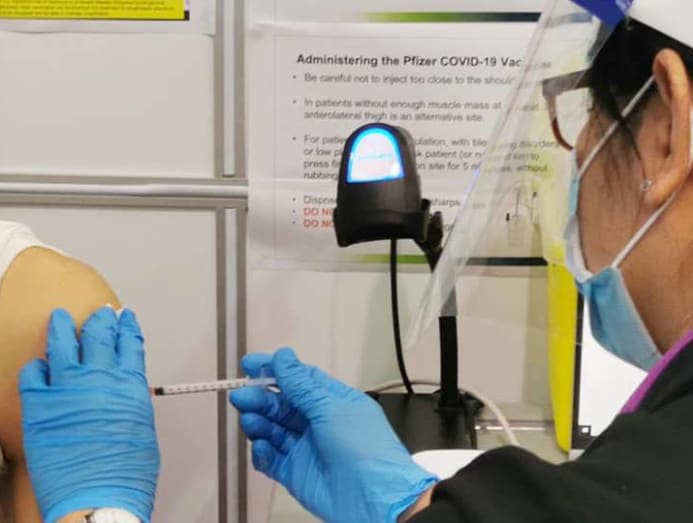
But electric current headline vaccination numbers belie troubling trends. Singapore's multi-ministry task force has announced that more 60 per cent of the elderly, who are at far higher run a risk of severe infection, take completed both doses, but this rate is not enough to "provide sufficient protection to the population" to let scaling back the restrictions more rapidly.
READ: Commentary: Inaccurate public understanding of COVID-19 vaccine efficacy has implications for vaccination rates
MOVING TO NORMAL, DEFINING NEW GOALS
Does this hateful that we can expect to move back to some sort of normalcy once we striking certain vaccination thresholds?
Perhaps, but we need to first define equally a society our objectives and the cost nosotros are willing to pay to get there.
Sure goals are unachievable in the near term. SARS-CoV-ii is so transmissible, there is no prospect of it being eradicated worldwide.
Herd immunity, wherein the entire population is protected from a disease because a sufficiently large number are immune through vaccination or infection, is currently as well incommunicable on a global scale.
It may even not be possible inside Singapore, given the transmissibility of the Delta variant and that not anybody can, or wishes to, be vaccinated.
READ: Commentary: Variants versus vaccines is becoming the new COVID-19 race
READ: Commentary: Some pain even as Singapore rises to the claiming of tighter COVID-19 measures
Instead, our objective has to be to alive with an endemic COVID-19. The conditions for doing so make that scenario possible.
In a few months' time, everyone willing and able to be vaccinated will have washed so.
Indeed, what that endemic country looks similar will depend on how many people remain unvaccinated, how willing we are to permit cases to rise, and what restrictions and rules nosotros are willing to tummy.

In one case we relax measures, even with relatively high vaccine coverage, we can expect example counts to abound, like during influenza epidemics. This means some people, specially elderly who did non go vaccinated, getting very sick and dying.
COVID-nineteen has claimed 35 lives in Singapore so far. What is an acceptable number of deaths from endemic COVID-nineteen? Would we exist willing to endure the same number of almanac deaths from COVID-xix as seasonal flu? Or twice as many deaths?
Hundreds of people die of flu-related causes in Singapore each twelvemonth. Against influenza, most of united states don't accept any special precautions, and we probably would non accept social distancing or mask wearing mandates to keep the common flu in cheque.
Setting expectations for how much worse we will tolerate from COVID-19 in the coming years will decide the level of vaccination needed to de-escalate measures.
READ: Commentary: Privacy in a pandemic — can I ask my GP if they've been vaccinated for COVID-nineteen?
READ: Commentary: What's behind no-shows in vaccination centres across Malaysia?
MAINTAINING HIGH VACCINE COVERAGE IS Cardinal
Ideally, vaccination coverage should be higher up 85 per cent of the total population, merely there are limits because of ineligibility, adverse reactions to the initial dose and vaccine hesitancy.
Both Israel and the UK have managed to provide at least one dose of the COVID-19 vaccine to 80 per cent of their adult populations, achieving more than 60 per cent vaccination rate for their whole population. It would be disappointing if nosotros cannot match that level.
The higher the vaccine coverage, the fewer long-term measures we would need to retain. Singapore should therefore put more attempt on promoting vaccination, including offer concrete incentives once all age groups have had a hazard to be vaccinated.
For example, we may well be able to relax quarantine for returning travellers who have been vaccinated, though whether lower-effectiveness vaccines should be given equal treatment to Pfizer and Moderna is unclear since the risk of infection may be higher.
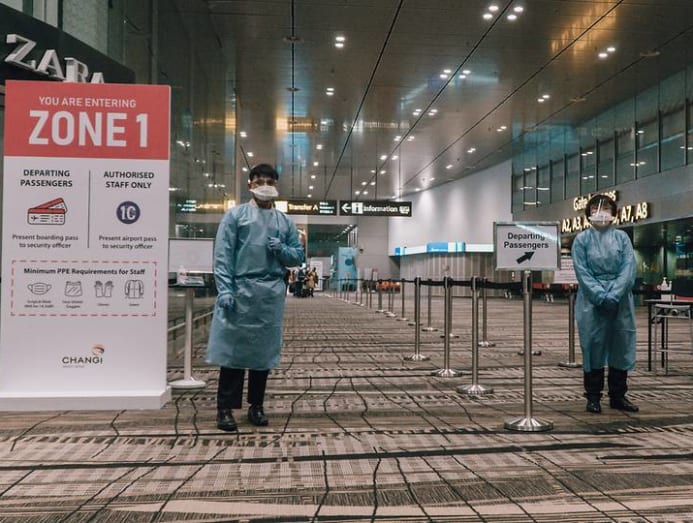
Getting vaccinated with the highest-efficacy vaccines is ideal to protect the private and population, though for those who cannot accept the mRNA vaccines, being vaccinated with an alternative is better than cipher at all.
More than generally, regime agencies volition accept to make up one's mind how to de-escalate their responses to COVID-19 cases and clusters, in tandem with achieving defined population vaccination thresholds.
In the transition to an endemic state, we could see more activities like events, weddings, movie theatres and eateries open up to accommodate more people with sufficient precautions.
READ: Commentary: COVID-19 unlikely to get a thing of the past anytime soon
WHAT A SUSTAINABLE NEW NORMAL LOOKS Like
Nosotros must besides think nearly sustainability. While current responses accept undoubtedly led to a much better situation in Singapore than many other countries, there is widespread fatigue in maintaining them.
Once we achieve the endemic land, the quartet of isolating, testing, tracing and quarantining should exist reviewed. What matters then is maintaining the astringent cases and deaths at that tolerable level.
We need to apply a targeted arroyo that tin chop-chop tackle new cases instead of a blunt sledgehammer. Isolating all cases in hospital or a community facility regardless of severity has been very effective but would non be necessary once most people are protected. Such an approach would besides be unfeasible if there are hundreds of mild cases a day.
READ: Commentary: We have to alive with an endemic COVID-xix. Hither's what that could wait similar
READ: Commentary: Why we missed dining out in Singapore these few weeks
Responding swiftly to contain the spread is cardinal but imposing stringent isolation and quarantine of contacts disincentivises many individuals with mild symptoms from seeking care and testing at primary care clinics, especially with the widespread availability of abode-testing kits. Costly healthcare and hospital resource are non needed in these instances.
Only removing infirmary-based isolation will crave mild or asymptomatic COVID-19 cases to exercise responsibility and self-isolate at home and rest, so that they exercise non spread it to others.
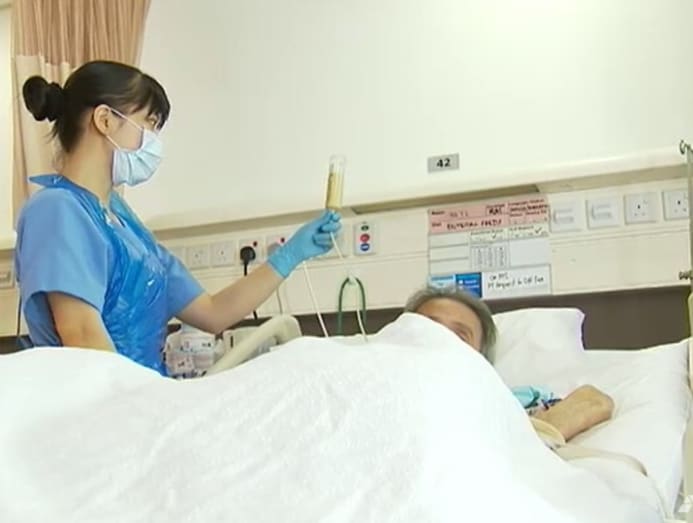
Moving to this country to relax other safe management measures volition require courage to shift away from obsessing over the daily numbers of cases, in the aforementioned we practice not obsess over how many people take hold of the common flu pre-COVID-xix.
Rather than the tail wagging the dog and policies irresolute in response to small fluctuations in the numbers of cases found, the Government too needs to de-emphasise the daily case counts.
Preparations for a future of owned COVID-19 should be made with clear and public signposts of policies and interventions that can be tied to rates of national vaccination and necessary utilisation of hospital resource.
Although there will ever be a degree of uncertainty owing to the ability of the virus to mutate further and "black swan" mass transmission events, these are relatively hands explained and accepted if skilful public communications and high trust in regime agencies are maintained.
Alex R Cook in an associate professor who leads the Biostatistics and Modelling Domain and serves as the vice dean of research at the NUS Saw Swee Hock School of Public Health. Hsu Li Yang is the Infectious Diseases Programme Leader, vice dean of global health, and associate professor at the same schoolhouse.
Source: https://cnalifestyle.channelnewsasia.com/commentary/commentary-singapores-bold-plan-reopen-these-are-hard-nosed-decisions-society-must-make-283956
0 Response to "Commentary: In Singapore’s bold plan to reopen, these are the hard-nosed decisions society must make"
Post a Comment